


 日本語
日本語  Deutsch
  English
  Español
  Français
  Português
There is a specific, quiet tension that exists in the heart of a man who has stayed in his hometown for too long. It isn’t necessarily a desire for a "vacation"—the modern concept of sitting poolside with a blended drink—but rather a biological and spiritual itch for the unknown.
It is the friction between the man he is and the man he suspects he could become if he were tested by a landscape that doesn’t know his name.
Anthropologists have long observed that for the majority of human history, manhood was not a state one simply settled into by hitting a certain age. It was a status that had to be earned, usually through a definitive break from the comforts of the hearth. Today, we call it "travel," but for the men who shaped our world, it was a rite of passage. It was the departure, the ordeal, and the return.
The Death of the Comfort Zone
In the modern West, we have largely sanitized the transition from boyhood to manhood. We have replaced the lion hunt and the vision quest with standardized testing and entry-level cubicles. While these are hurdles, they lack the visceral "otherness" required to forge a resilient masculine identity.
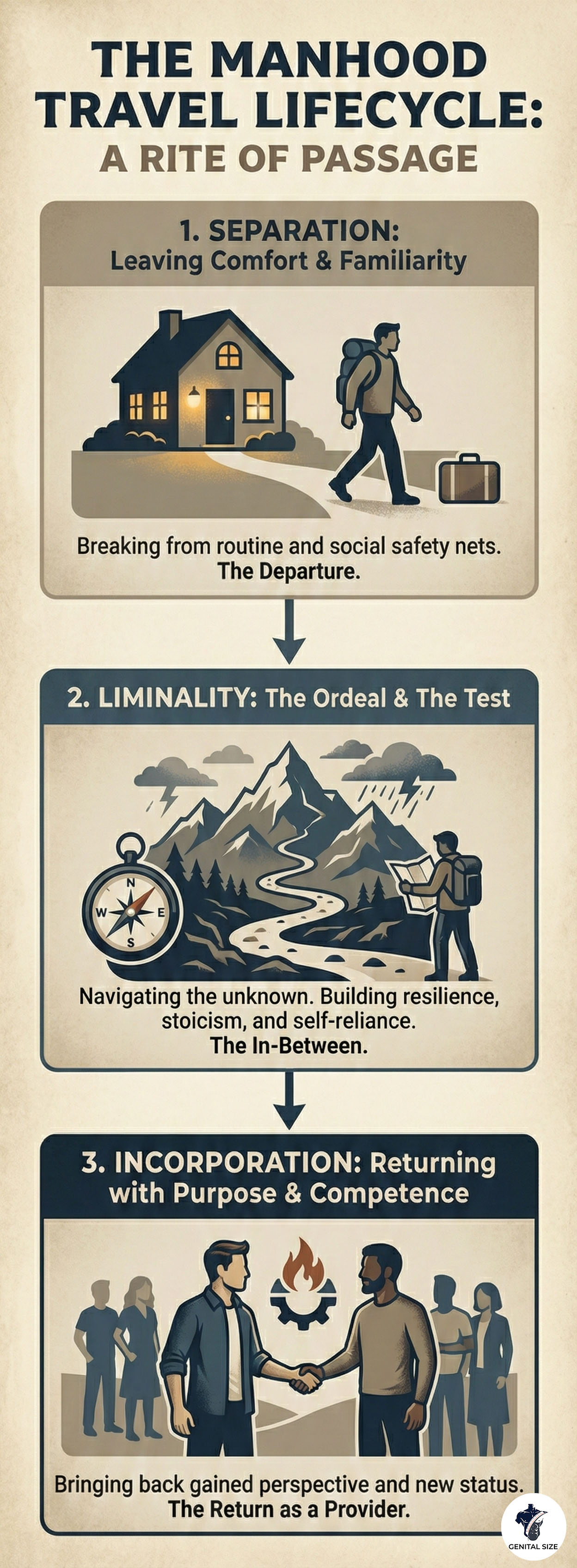
Anthropologist Arnold van Gennep, who coined the term rite de passage in 1909, identified a three-stage process that remains the blueprint for masculine development:
-
Separation: The man leaves his familiar social group and the comforts of home.
-
Liminality: The "in-between" phase. He is no longer a boy, but not yet a proven man. He is a stranger in a strange land, stripped of his status and forced to rely on his wits.
-
Incorporation: He returns to his community with a new status, having proven he can survive, provide, and navigate the world.
When a man travels today—not as a tourist, but as an adventurer—he replicates this ancient cycle. When you are standing in a mountain pass in the Andes or navigating a chaotic market in a foreign capital, the safety nets of your social standing and your professional titles vanish. The world doesn't care about your LinkedIn profile. It only cares if you can find your way, manage your resources, and keep your head when things go wrong.
"A man who has seen the scale of the world is less likely to be rattled by the trivial because he has calibrated his sense of what a real problem looks like."
The Geography of Competence
Traditional masculinity is rooted in the role of the provider and the protector. These roles require a high degree of situational competence. In a domestic setting, our competence is often theoretical. We know how to pay the mortgage and fix a leaky faucet, but we are rarely pushed to the edge of our capabilities.
Travel acts as a laboratory for masculine development. It forces a man to exercise the "hard" virtues: Decisiveness, Stoicism, and Resourcefulness. Anthropologists note that in many cultures, the "young men’s house" or the period of wandering served to break the "psychological umbilical cord." By navigating the world alone or with a pair of trusted peers, a man learns that he is the primary agent of his own survival.
The Lifecycle of the Journey: An Adventure Curriculum
Manhood is not a destination reached once; it is a contract that requires "re-upping" through periodic challenges. Depending on a man’s season of life, his "Rite of the Road" will serve a different psychological and social purpose.
1. The Proving Ground: The Young Man’s Rite (Ages 18–25)
At this stage, a young man is often moving from a position of being provided for to becoming a provider. He needs to know that he is capable of handling the world without a safety net.
-
The Objective: Resilience and Self-Reliance.
-
The Geography: High-friction environments. Think of countries with complex logistics or rugged wilderness.
-
The Challenge: The "Low-Resource" Trek.
-
The Task: Navigate a multi-week journey with a fixed, modest budget and no pre-booked luxury transport. This could be backpacking through Central Asia or the Balkans.
-
Why it works: It forces the young man to negotiate, solve problems in real-time, and manage his impulses. He learns the difference between a "want" and a "need" when his resources are finite.
-
The Outcome: He returns with the "competence of the stranger." He knows he can land anywhere on earth and figure out how to survive.
-
2. The Strategic Retreat: The Mid-Life Recalibration (Ages 35–55)
By mid-life, a man has often achieved some level of success, but he is frequently bogged down by the "middle-management" of life—mortgages, career plateaus, and the constant noise of responsibility. He risks becoming "domesticated" to the point of stagnation.
-
The Objective: Perspective and Renewed Purpose.
-
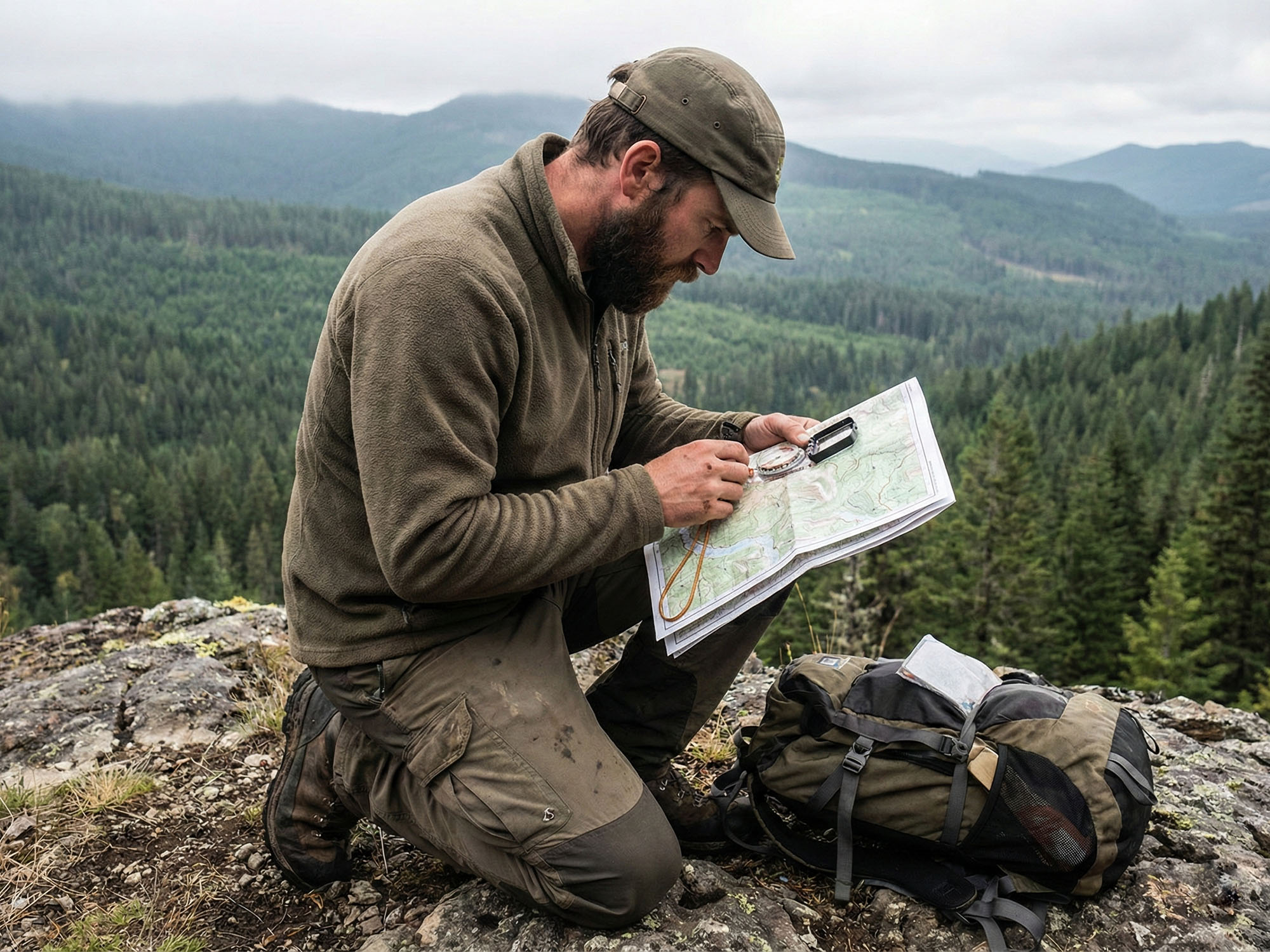
The Geography: Vast, silent landscapes. The Australian Outback, the Mongolian Steppe, or the deep forests of the Pacific Northwest.
-
The Challenge: The "Skill-Based Expedition."
-
The Task: Engage in a journey that requires learning a difficult, traditional skill. This might be a week of cattle droving on horseback, a technical mountain climb that requires training, or an off-road expedition where he is responsible for his own mechanical repairs.
-
Why it works: It strips away the titles and the "ego" of his professional life. The horse doesn't care if he’s a CEO; the mountain doesn't care about his salary. It reconnects him with his physical body and his ability to master a craft.
-
The Outcome: He returns with a cleared "internal cache." The trivial stressors of the office seem small compared to the scale of the desert or the peak. He returns to his family not as a tired worker, but as a refreshed leader.
-
3. The Sage’s Journey: The Legacy Quest (Age 60+)
As a man enters his later years, his role shifts from the "warrior" to the "elder." His journey is no longer about proving he can do it, but about synthesizing what he has learned and preparing to pass it on.
-
The Objective: Wisdom and Ancestry.
-
The Geography: Historic or ancestral lands.
-
The Challenge: The "Ancestral Pilgrimage."
-
The Task: A deep-dive journey into the lands of his forefathers, focusing on history, craftsmanship, and the "long view" of time. This is a slower, more observational journey.
-
Why it works: It places his life in the context of a longer chain of men. It helps him understand the sacrifices made before him and the legacy he is leaving behind.
-
The Outcome: A sense of peace and place. He understands his role as a link in a chain, which provides a profound sense of security and dignity in his later years.
-
The Architecture of the Trip
Regardless of age, a true rite of passage should follow a specific structure to ensure it remains a growth experience rather than just "time off."
-
Preparation: Engage in physical training or skill acquisition 3–6 months prior. This builds the mental "buy-in" required for the challenge.
-
The Threshold: A symbolic act of leaving. Turn off the phone, leave the laptop at home, and mark the official start of the "ordeal."
-
The Ordeal: The core challenge of the trip—the climb, the long haul, or the language barrier. This is the "liminal" state where the old self dies and the new self is forged.
-
The Reflection: Spend 48 hours in solitude at the end of the journey. Process the lessons before returning to the noise of the modern world.
Quick-Start: Planning Your Ordeal
- Physical Topographic Map
- Analog Journal & Pen
- Reliable Fixed-Blade Knife
- Functional Basic Phrases
- Do eat where the locals eat.
- Do get lost intentionally.
- Do say "yes" to safe discomfort.
- Don't check work emails.
- Don't rely solely on GPS.
- Don't complain about the weather.
Travel & Manhood: Common Questions
The Return: Bringing Back the Fire
One of the most significant aspects of the rite of passage is the Return. In ancient myths, the hero doesn't just go on a journey for his own ego; he goes to find something of value for his tribe—knowledge, medicine, or a new territory.
When a man travels with the mindset of an adventurer, he returns to his home as a better man. He is less likely to be rattled by trivial stresses because he has a calibrated sense of what a "real" problem looks like. He has seen the scale of the world and found his place within it.
The frontier is not dead. It is a state of being where a man is tested. So, pack the bag. Leave the "all-inclusive" brochures behind. Find a place that scares you just a little bit, and go there. Your family, your community, and your own soul will be better for it when you return.
Disclaimer: The articles and information provided by Genital Size are for informational and educational purposes only. This content is not intended to be a substitute for professional medical advice, diagnosis, or treatment. Always seek the advice of your physician or another qualified health provider with any questions you may have regarding a medical condition.