

 日本語
日本語  Deutsch
  English
  Español
  Français
  Português
For many men visiting GenitalSize.com, the primary concern is a static number on a ruler. However, from a clinical and physiological perspective, "size" is not just a genetic set point; it is a functional platform.
One of the most common phenomena in urological health is the "Hidden Inch"—anatomical length that is physically present but obscured by poor posture, body composition, and suboptimal circulatory health.
By shifting the focus from "enhancement" to Genital Fitness, you can optimize the platform, correct the "Hidden Inch," and reach your true anatomical potential.
⚡ Quick-Start Guide
- Tools: Full-length mirror, BMI Calculator, soft measuring tape.
- Do: Focus on core stability and glute strength to rotate the pelvis.
- Don't: Use aggressive "stretchers" or unverified pumps; focus on natural blood flow.
In clinical urology, "buried" anatomy is often the first thing addressed before considering surgery. Many patients find that lifestyle-based 're-emergence' provides more satisfactory results than invasive procedures.
1. The Anatomy of the "Hidden Inch"
To understand how length becomes "hidden," we must look at the Suprapubic Fat Pad and the Suspensory Ligament.
The base of the male anatomy is anchored to the pubic bone by a tough, fibrous band called the suspensory ligament. In a fit, lean individual, the transition from the abdominal wall to the pelvic region is relatively flat. However, as body fat percentages rise—specifically in the "spare tire" or lower abdominal region—the body begins to store excess adipose tissue directly over the pubic bone.
This is the Suprapubic Fat Pad. As this pad thickens, it swallows the base of the shaft. Clinically, it is estimated that for every 15 to 20 pounds of excess weight a man carries in this region, he loses approximately one inch of visible, functional length. This length hasn't disappeared; it is simply buried under a layer of "padding."
Table: BMI & Anatomical Visibility Correlation
2. The Postural Variable: Anterior Pelvic Tilt
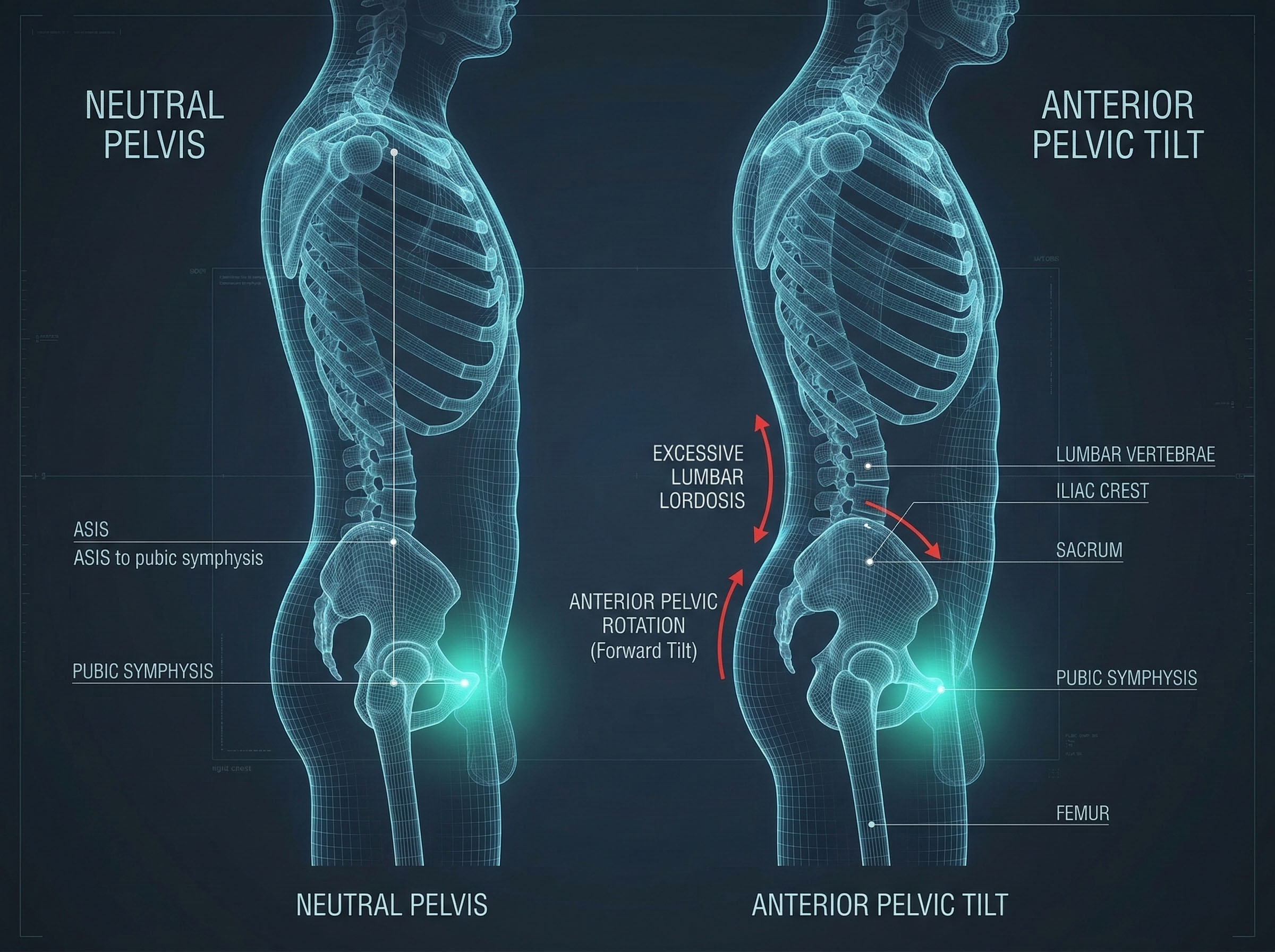
Even for men who are not overweight, poor "pelvic fitness" can lead to a recessed appearance. Modern life is defined by sitting. Chronic sitting leads to tight hip flexors and weak glutes, resulting in a condition called Anterior Pelvic Tilt (APT).
In APT, your pelvis rotates forward (the top of your hips tilts toward your toes). This causes your lower back to arch excessively and your glutes to stick out. Most importantly, it pulls the pelvic cradle backward, making the genital area appear more recessed and downward-pointing. By correcting this tilt, you "reset" the pelvis to a neutral, forward-facing position, which improves the angle of suspension and makes the anatomy appear more prominent.
3. The Genital Fitness Routine: A 3-Step Protocol
Cultural Insight
In Ancient Greece, a lean, athletic lower abdomen and "small" anatomical proportions were considered the height of civilized masculinity. Excessive size was often depicted in satyrs to represent a lack of control, while the "heroic" physique prioritized pelvic fitness and symmetry.
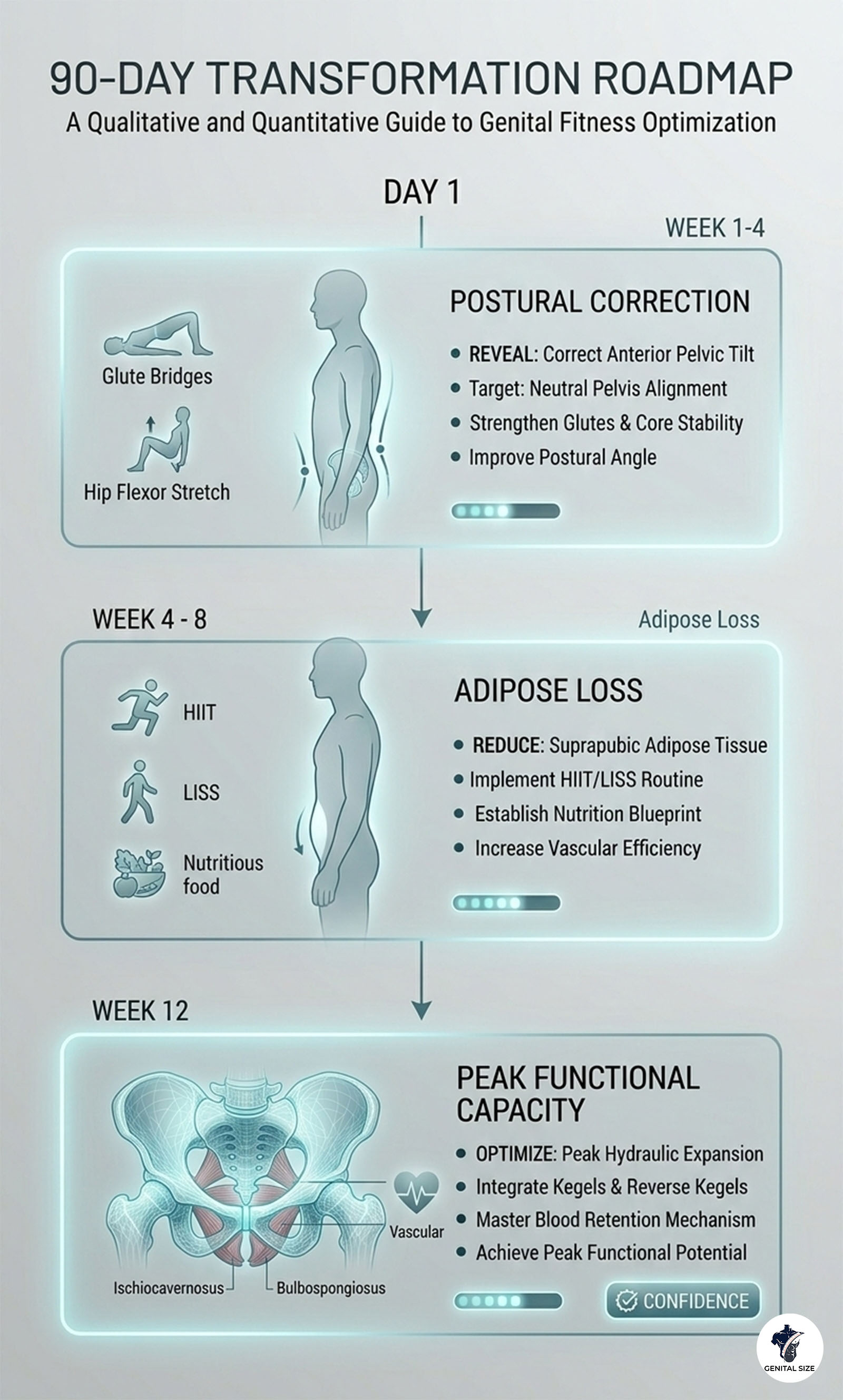
To reveal the "Hidden Inch," you must treat the pelvic region like any other muscle group. This routine focuses on fat loss, postural correction, and blood retention.
Step 1: Adipose Target (The "Pad" Reduction)
You cannot spot-reduce fat, but you can prioritize movements that increase metabolic demand in the core.
- The Action: High-Intensity Interval Training (HIIT) paired with "LISS" (Low-Intensity Steady State) cardio.
- The Goal: Drop your body fat percentage to a range where the pubic bone is visible (typically below 18-20% for most men).
Step 2: Postural Reset (The "Forward Shift")
To fix Anterior Pelvic Tilt, you must stretch what is tight and strengthen what is weak.
- The Stretch: Kneeling Hip Flexor Stretches. (Hold for 30 seconds per side). This releases the tension pulling your pelvis forward.
- The Strength: Glute Bridges. (3 sets of 15 reps). Strengthening the glutes pulls the bottom of the pelvis forward, correcting the tilt.
Step 3: The Vascular Anchor (Pelvic Floor Tone)
The Ischiocavernosus and Bulbospongiosus muscles are the "biceps" of the pelvic floor. They are responsible for pumping blood into the chambers and, more importantly, keeping it there.
- The Action: Targeted Kegels and "Reverse Kegels."
- The Routine: Contract the pelvic floor (as if stopping the flow of urine) for 5 seconds, then—this is the "Reverse" part—consciously relax and "push" gently outward for 5 seconds. This ensures the muscles are both strong and flexible.
4. The "Fuel" Section: Nutrition for Hemodynamics
Exercise is only half the battle. To maintain the "fitness" of your circulatory system, you need the right chemical precursors.
- L-Citrulline & Nitrates: Found in watermelon, beets, and leafy greens. These are converted into Nitric Oxide, which relaxes blood vessels and allows for maximum hydraulic expansion.
- Zinc & Magnesium: Essential for maintaining the hormonal environment (testosterone) that drives the desire and the ability to perform.
- Hydration: Blood is primarily water. Dehydration leads to lower blood volume, which directly impacts the "fullness" and functional size of the anatomy during arousal.
5. The Expert Take: Why "Functional Size" Wins
Urologists often note that a man’s "functional size"—his ability to achieve and maintain peak expansion—is a better indicator of health than his flaccid measurements.
"Many men focus on the 'frame' of the car, but they ignore the engine," says one clinical perspective. "If your heart is healthy, your blood pressure is managed, and your pelvic muscles are toned, you are maximizing the hydraulic potential of the tissue you were born with."
Genital Fitness is about Efficiency. A fit system with high Nitric Oxide production and strong pelvic retention will always outperform a larger, sedentary system that suffers from poor blood flow and high suprapubic fat.
6. The Size Insight Pivot: Contextualizing the Data
Now that you understand how to optimize your platform, it’s time to look at where you stand.
If you have successfully implemented a Genital Fitness routine for 90 days, your measurements likely reflect your Peak Functional Capacity. This is your "True Size." Comparing this number to our [Global Data & Statistics] allows you to see your standing within the human population with a much higher degree of accuracy.
Remember: The goal of Genital Fitness isn't to become someone else; it's to stop being the "buried" version of yourself.
Expert Q&A: Pelvic Optimization
Disclaimer: The articles and information provided by Genital Size are for informational and educational purposes only. This content is not intended to be a substitute for professional medical advice, diagnosis, or treatment. Always seek the advice of your physician or another qualified health provider with any questions you may have regarding a medical condition.